How the rules engine actually works.
Each post walks through a real mechanism inside Krino, with the formulas and the screen it produces. Every screen is in the live demo, no signup.
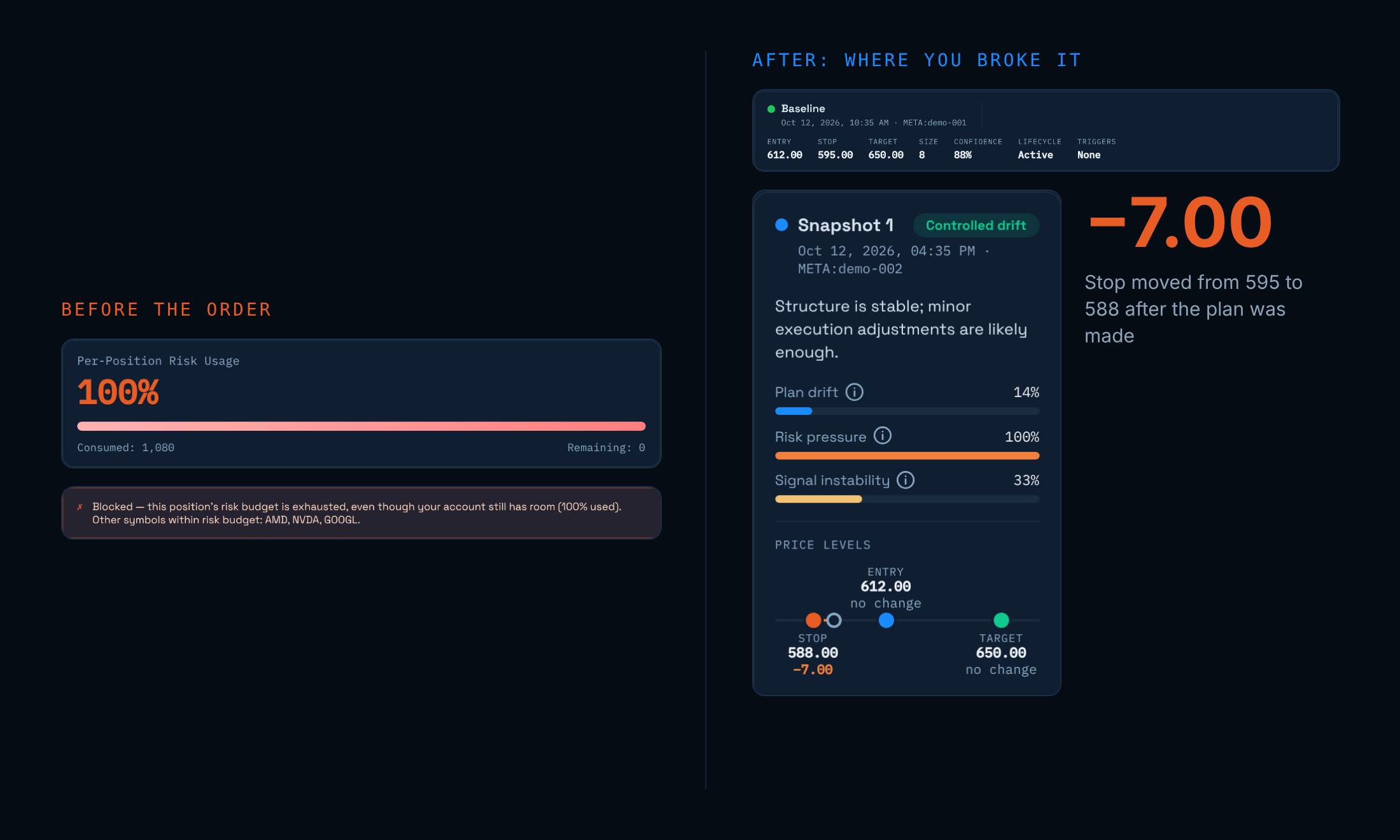
You Don’t Lose Money on Bad Picks. You Lose It on Broken Rules.
Moving the stop, sizing up after a win, holding a loser too long. How to stop each one before the order, and keep the plan so you can see where you broke it.
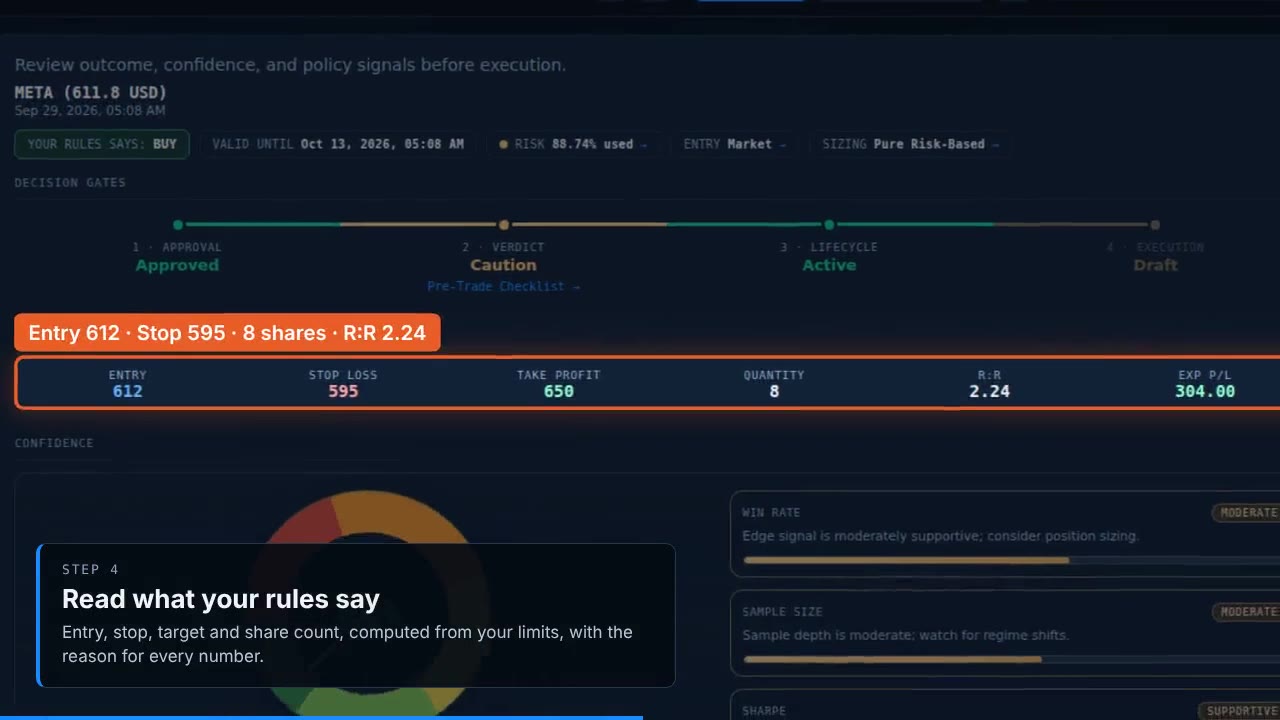
How I'd start trading today: write the rules before the first trade
Personal advice from Krino's founder: a slow timeframe, a cap on risk per trade, sizing from the stop and a record of every decision. With a first-90-days plan and a 2-minute getting-started video.
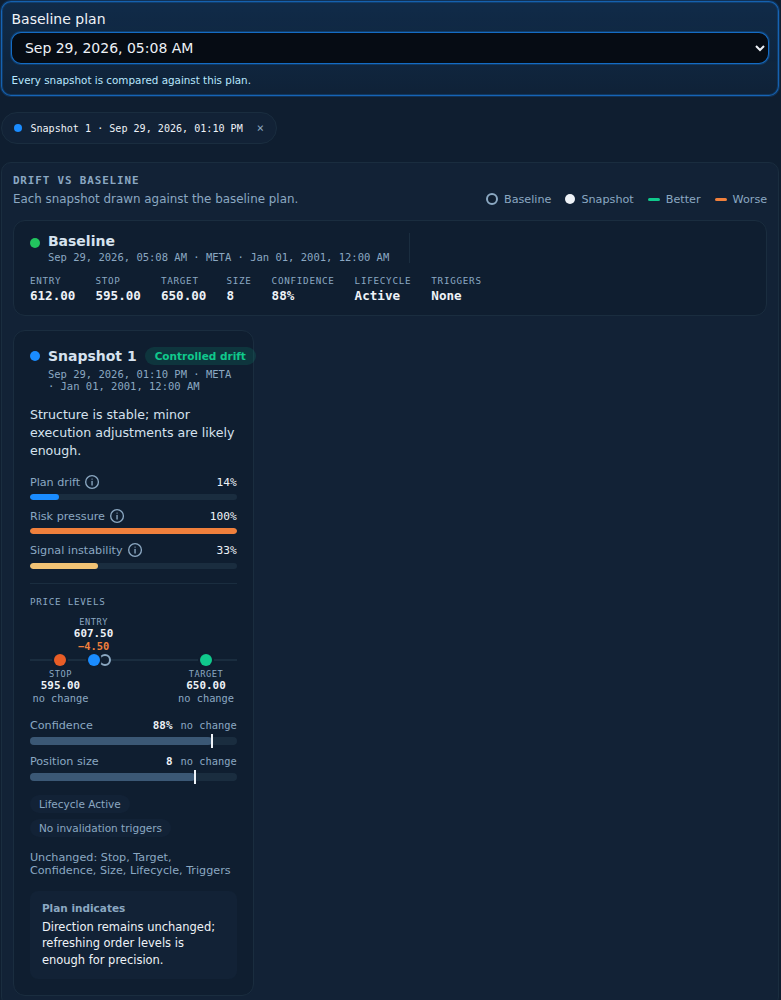
What makes a trading journal useful? Write the plan down before the trade
Mistake tags only mean something when they're checked against a plan recorded before the outcome. How to turn revenge trades, moved stops and late entries into measurable gaps, priced in R.
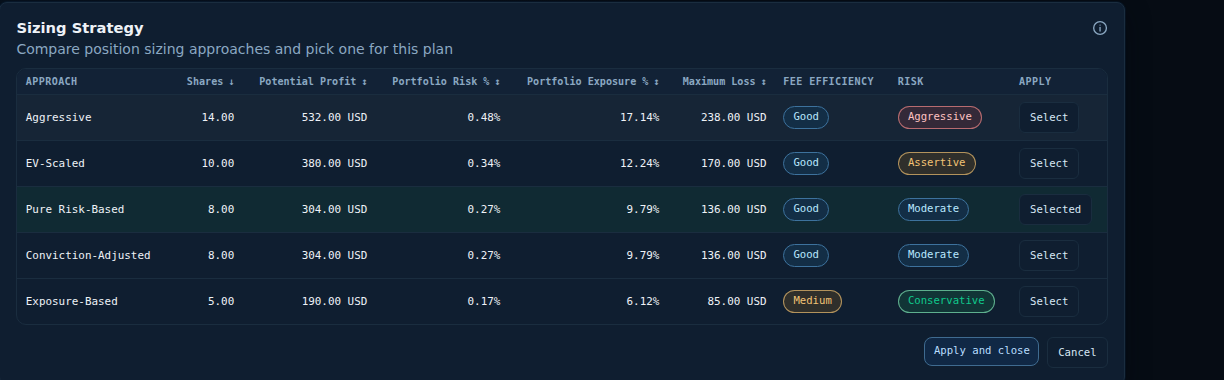
How many shares should you buy? Comparing five position sizing models
Two traders can take the same setup and get completely different results. A practical, numbers-first walkthrough of all five sizing models Krino computes — with one worked trade example, set up in Krino, throughout.
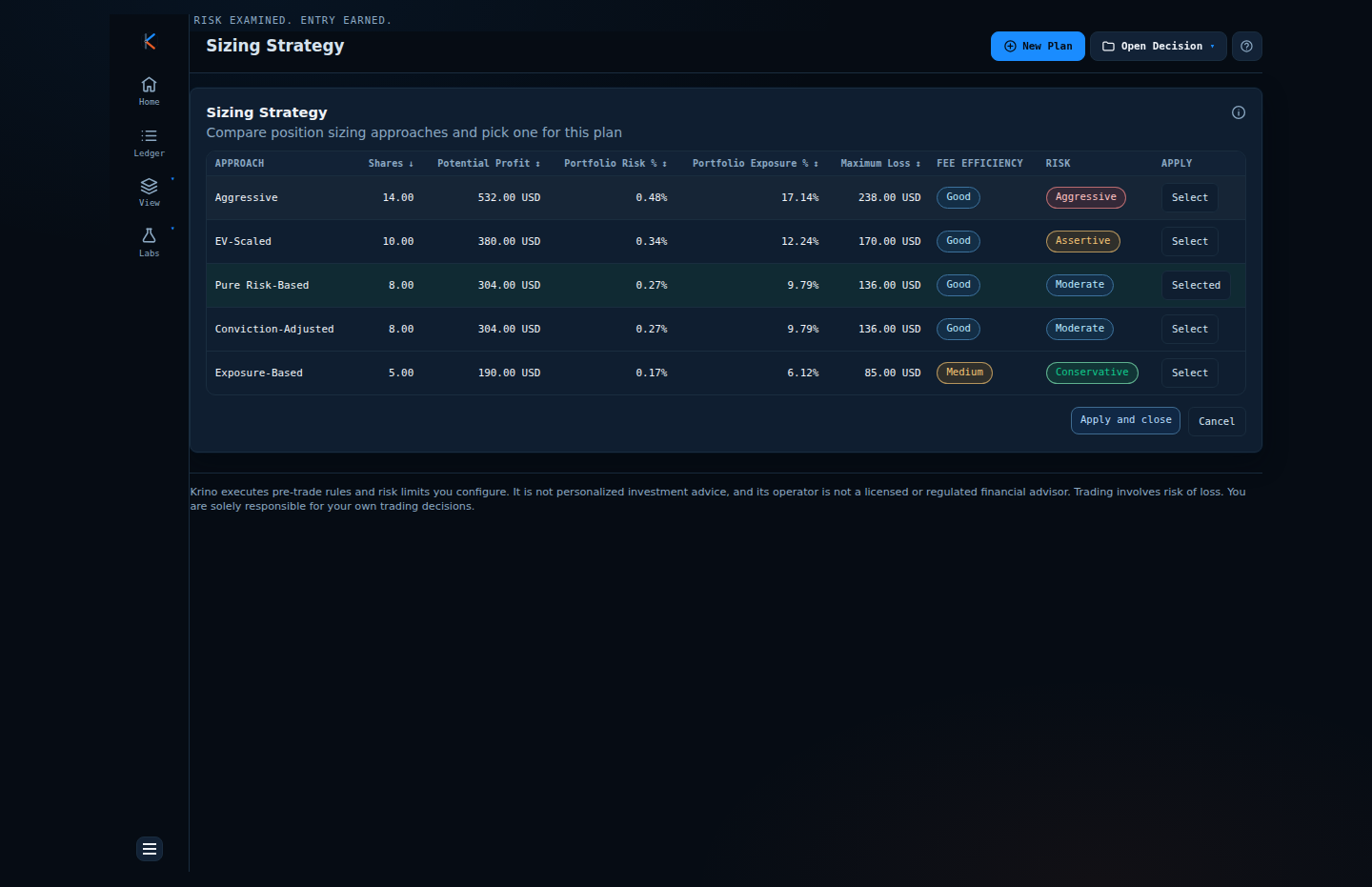
Which Position Sizing Model Fits Your Trading Style? A Practical Decision Guide
You know the five sizing formulas. Which one should you actually use? A decision guide built around the one variable that breaks most sizing: stop distance.
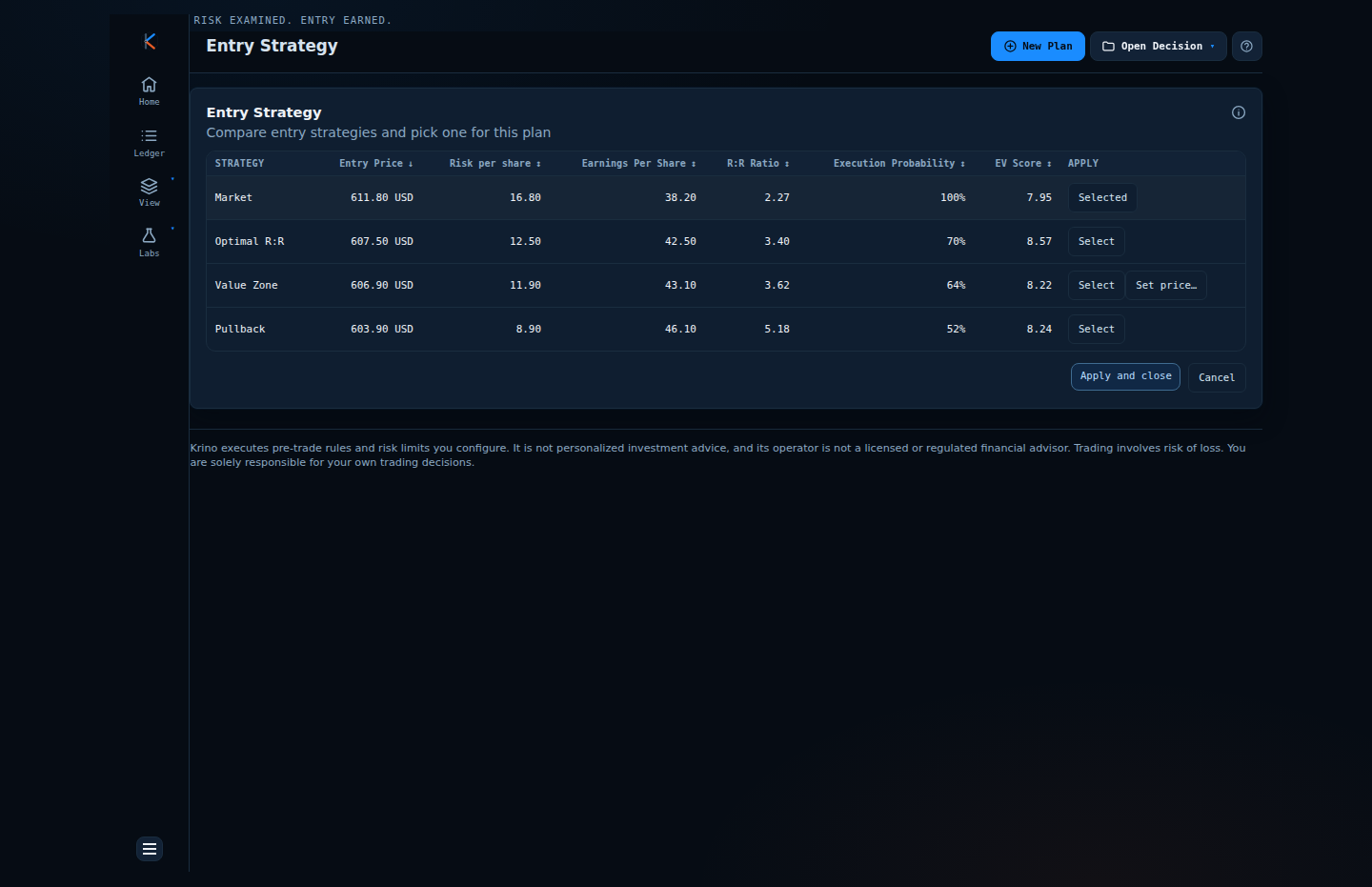
Market vs Pullback vs Breakout Entries: How to Choose Your Entry Strategy
Waiting for a pullback gives a 5.2 reward-to-risk. It also gives a 52% chance of being filled. How to weigh price against probability with one number.
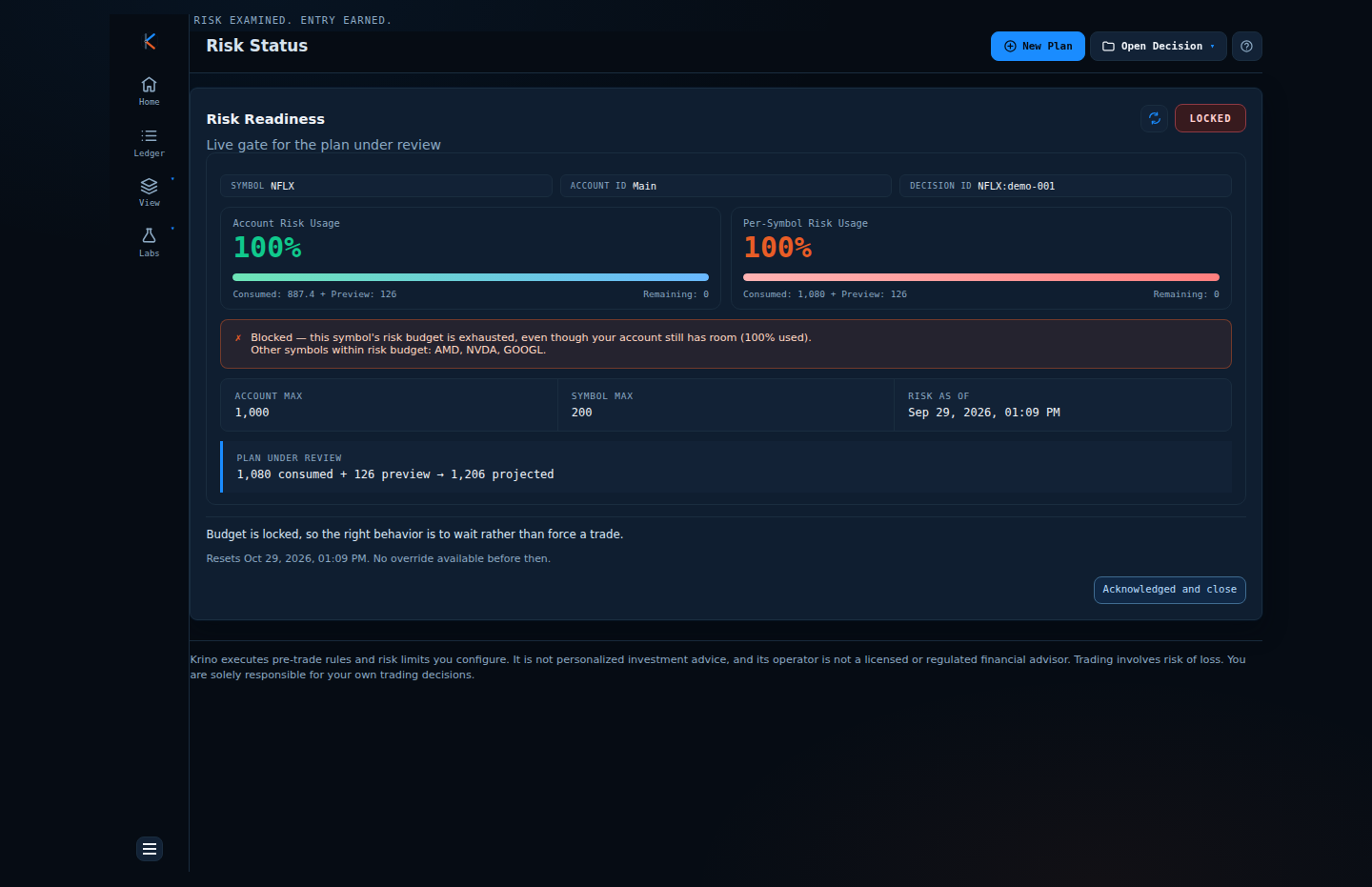
Why Most Traders Ignore Risk (And What to Do Instead)
Nobody ignores risk because they never heard of it. They ignore it at exactly the moment it matters. Why that happens, and how to make the right behaviour automatic.
Risk/Reward Optimization: How to Improve Your Ratio Without Fooling Yourself
Moving the target twice as far away doubles your ratio on paper. It does nothing for your account unless price actually gets there. Where real improvement comes from.
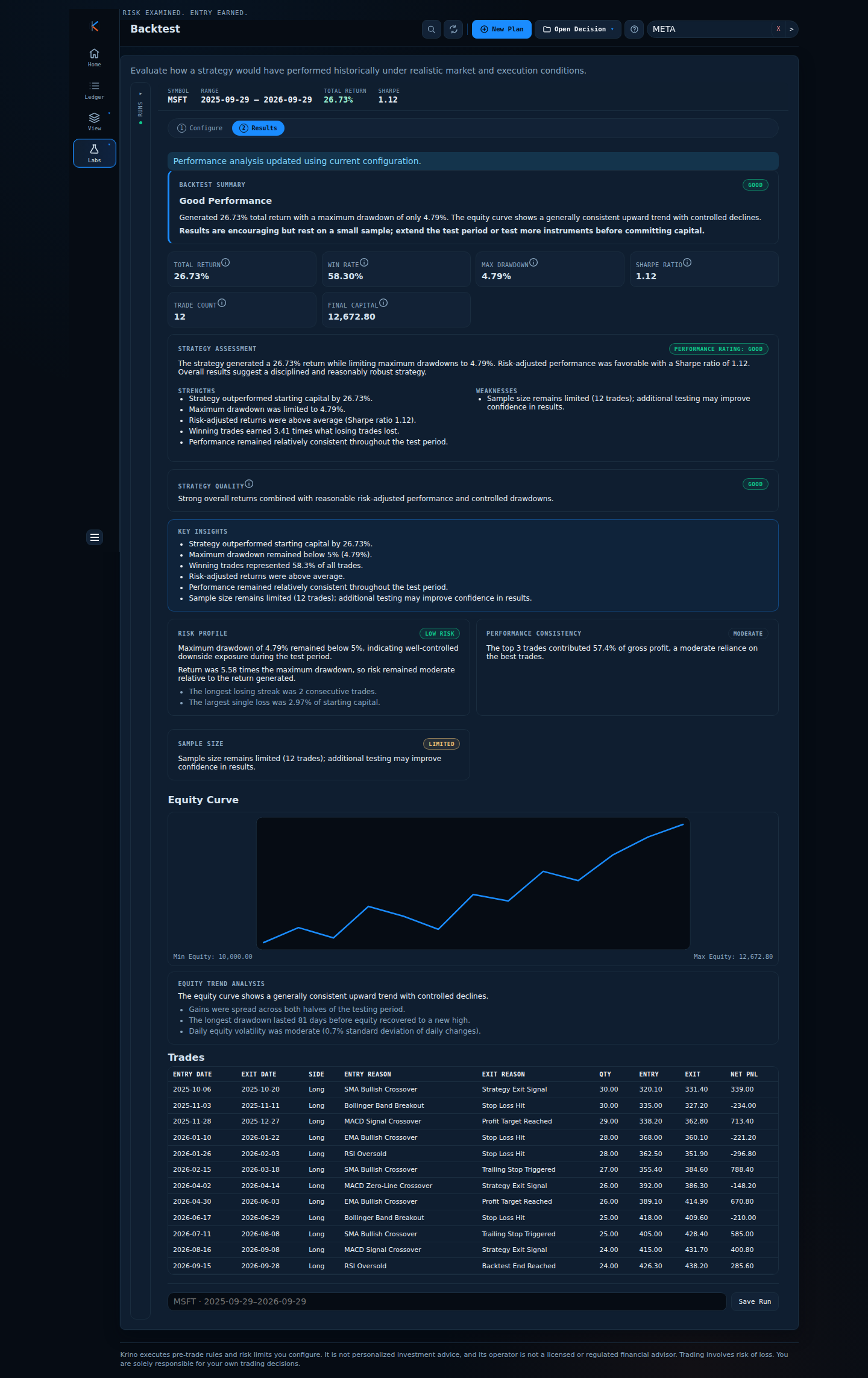
Expected Value in Trading: The One Number Behind Every Good Strategy
A 70% win rate can lose money and a 40% win rate can make it. The one formula that explains both, and how to estimate it honestly from your own trades.
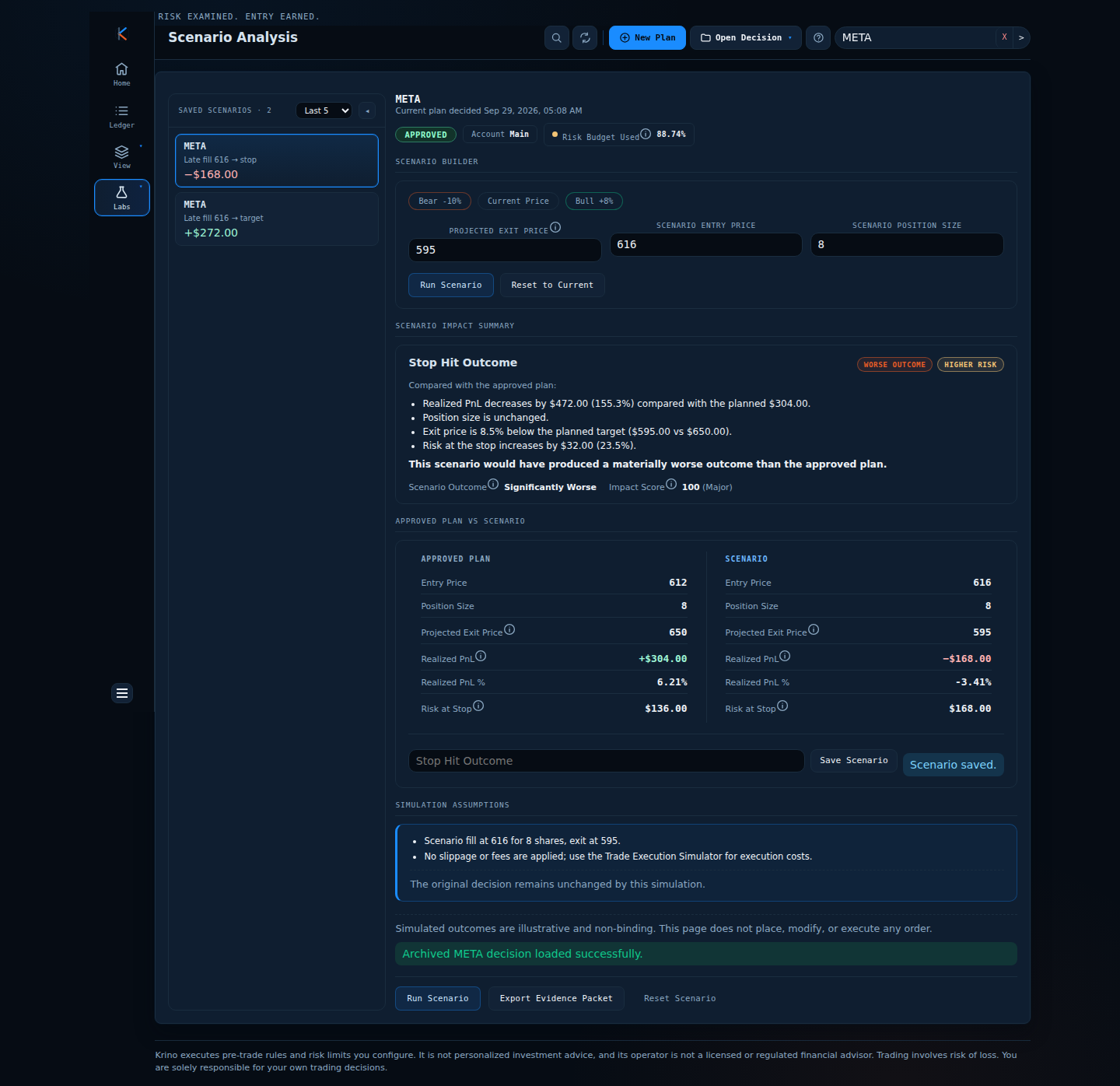
What-If Simulations: Stress-Test a Trade Before You Risk Real Money
A plan that works at 612 and breaks at 616. How to find that out in two minutes, before the order, and what to do about it.
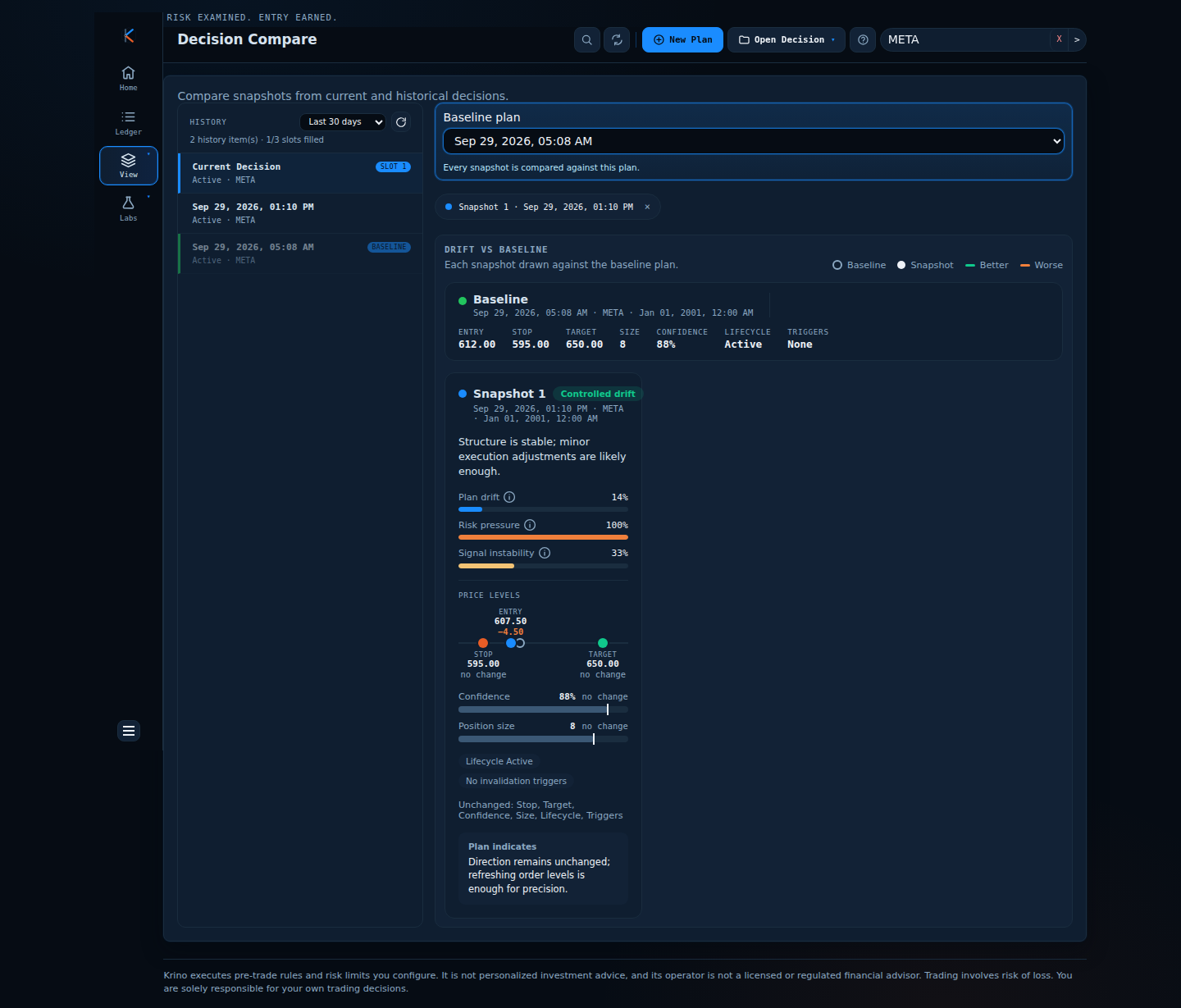
How to Review a Losing Trade: Bad Luck, or Broken Rules?
A stopped-out trade that followed the plan is a good trade with a bad outcome. A stopped-out trade that broke the plan is a lesson. A review that tells them apart.
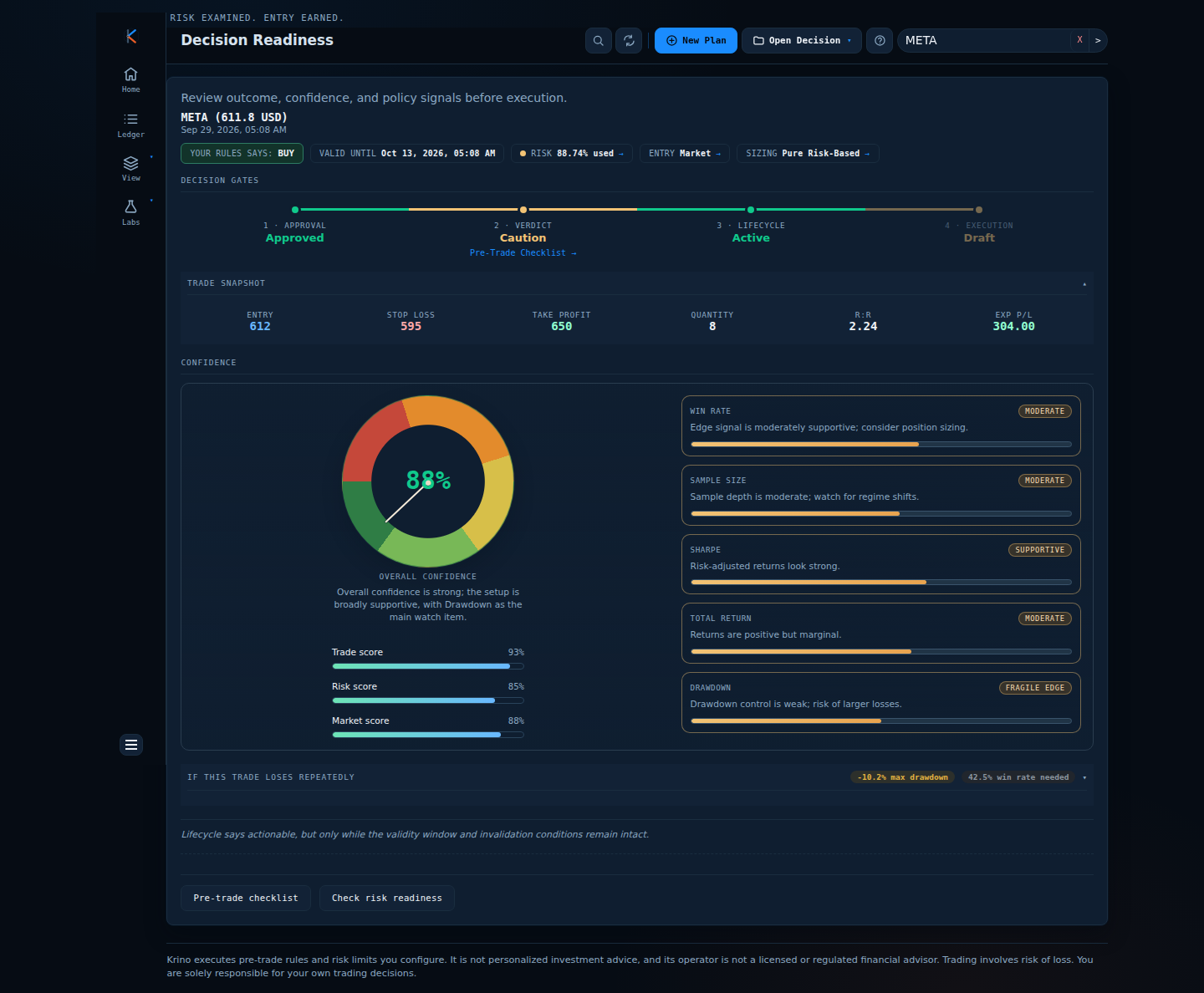
The Trading Decision Lifecycle: From Idea to Closed Trade
Approved is not the same as actionable, and actionable is not the same as still valid. The four questions every trade has to pass, in order.
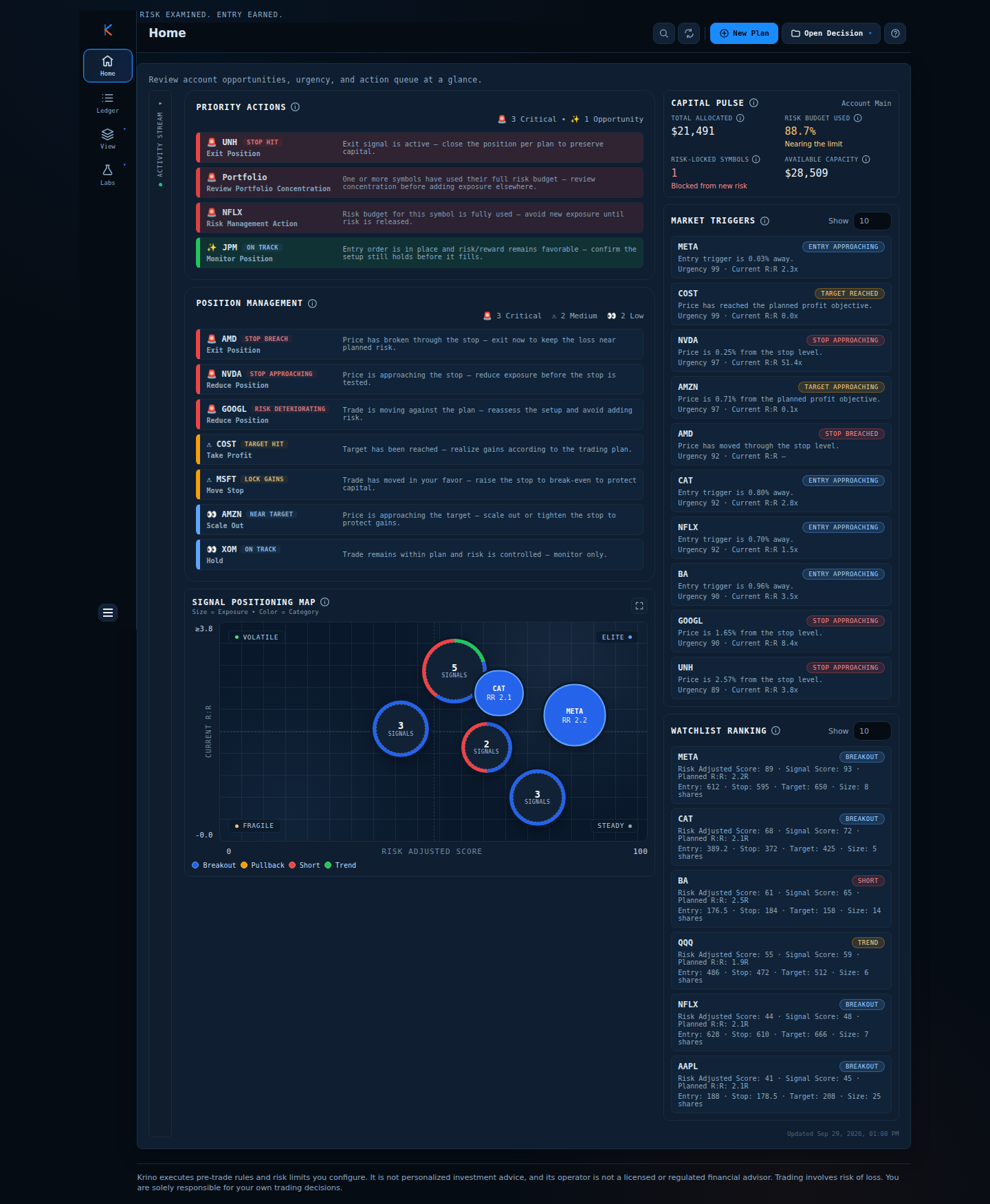
Signal Ranking Explained: How to Pick the Best Setup From a Long Watchlist
Signal strength is not the same as trade quality. Why the best-looking signal is often not the best setup, and how to rank by what survives risk.
Near-Trigger Watchlists: Stop Staring at Charts and Watch the Distance to Your Trigger
Most watchlists are a list of names. A near-trigger watchlist is a list of distances. Why that one change cuts screen time and missed entries.
The Attention Radar: How to Decide Which Symbol Needs You First
Quality ranks the ideas you might take. Urgency ranks the ones that need you right now. Two different lists, and why you need both.
The Daily Action Queue: How to Turn a Messy Day Into a Short, Ranked To-Do List
Risk protection beats opportunity. Opportunity beats housekeeping. How to rank a trader's day so the order of work is decided before the market opens.
Portfolio Heatmaps: See Concentration Risk Before It Sees You
Ten positions, ten rows, no picture. Why a spatial view of your book finds crowding and weak setups that a list hides, and how to read one.
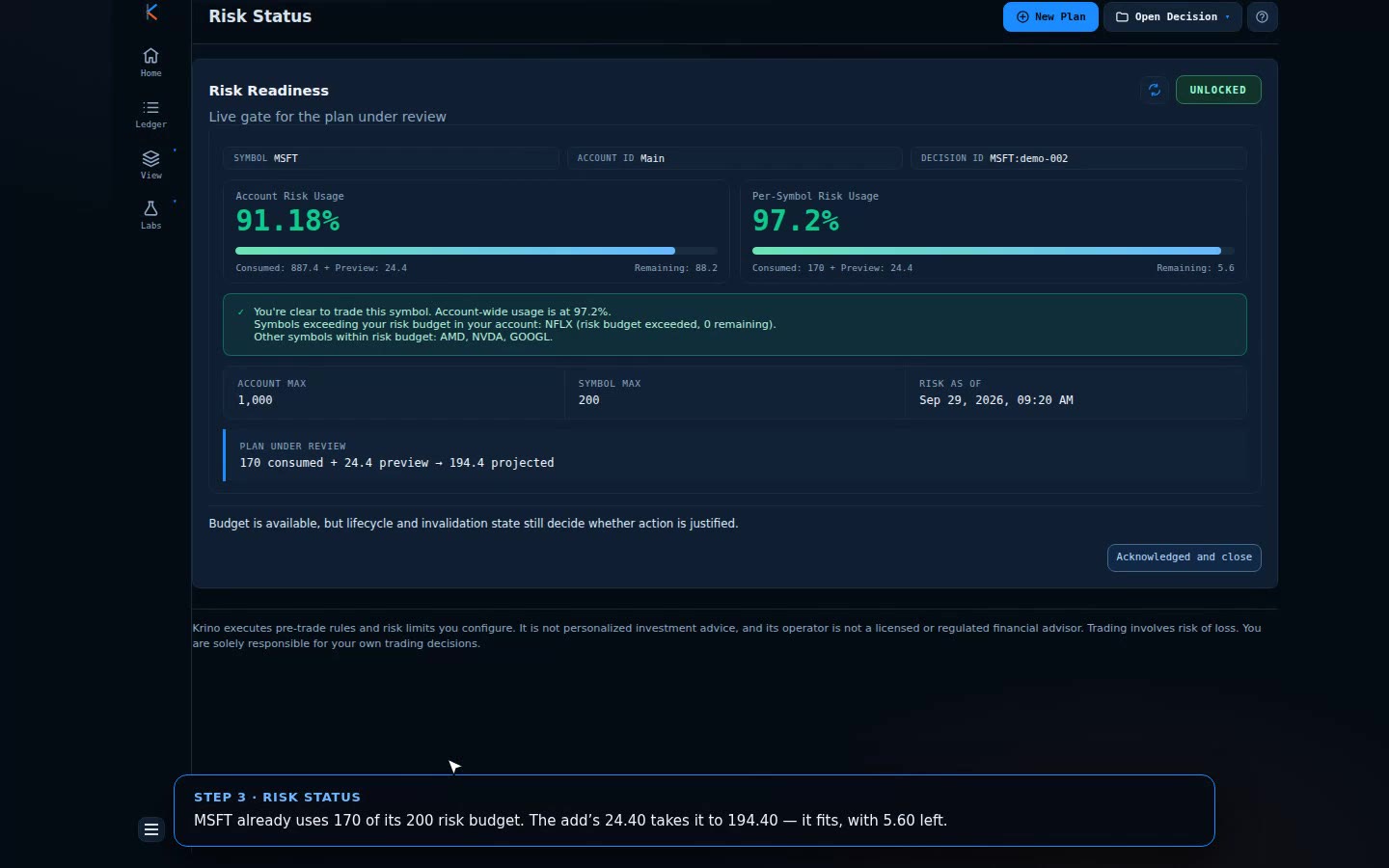
Building a Risk-First Portfolio: Decide What You Can Lose Before What You Can Buy
Start with what you can lose, not what you want to own. How to turn one risk budget into position sizes, symbol caps and a hard stop on adding, with a worked add that fits by 5.60.
How AI Can Improve Trading Decisions (and Where It Shouldn't Be Trusted)
AI can read a hundred journal entries before you finish your coffee. It cannot own a risk limit. Where to use it, where not to, and the guardrails in between.
Risk budgets: why Krino locks new trades before you blow through your limit
How the account- and position-level risk gate is computed, and why it looks at your entire book, not just the trade in front of you.